


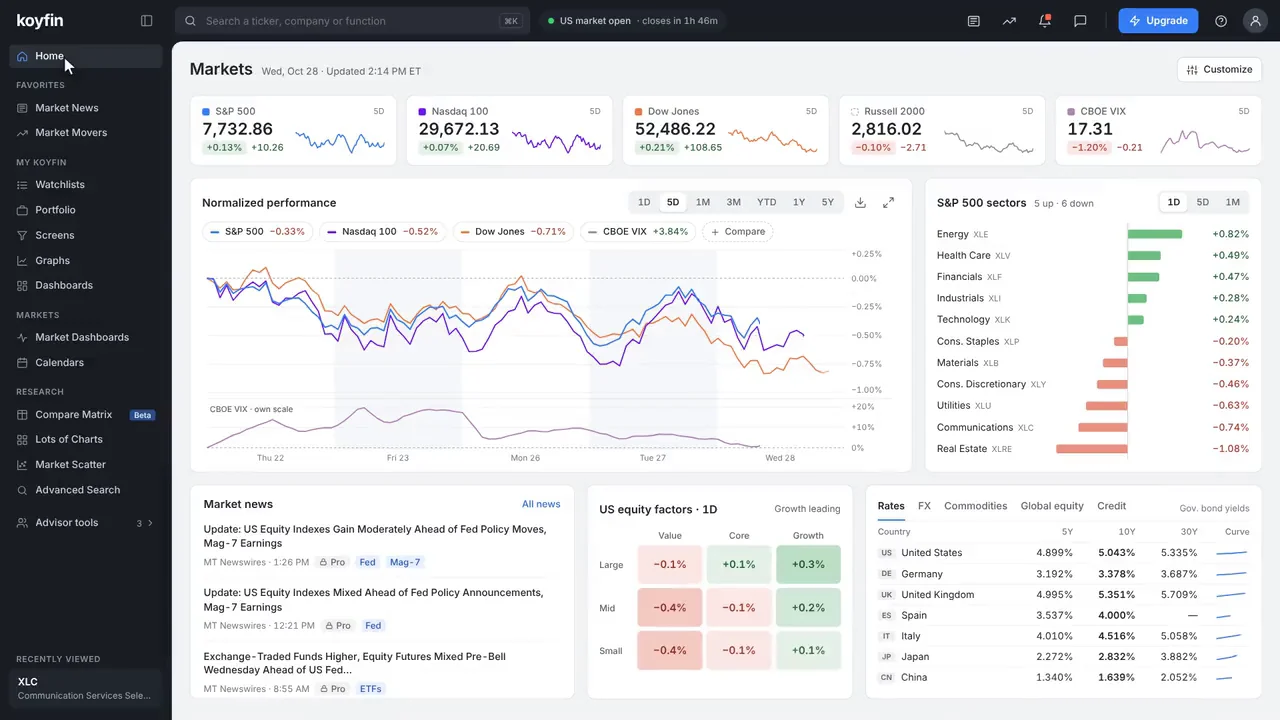
Koyfin · Investment research platform
3×users while we were in the team, from 100K in 2020 to 300K+ in early 2022. We designed 8 core web features and the design system.
DIXI is a founder-led design and development studio for fintech products: investment research, wealth, trading and fund-tech platforms. From 2020 to 2022 we worked inside Koyfin’s product team as it grew from 100K to 300K+ users, designing its native iOS and Android app from zero, 8 core web features and the design system. Projects start at $12k.
 By Ignat, founder of DIXI · Updated
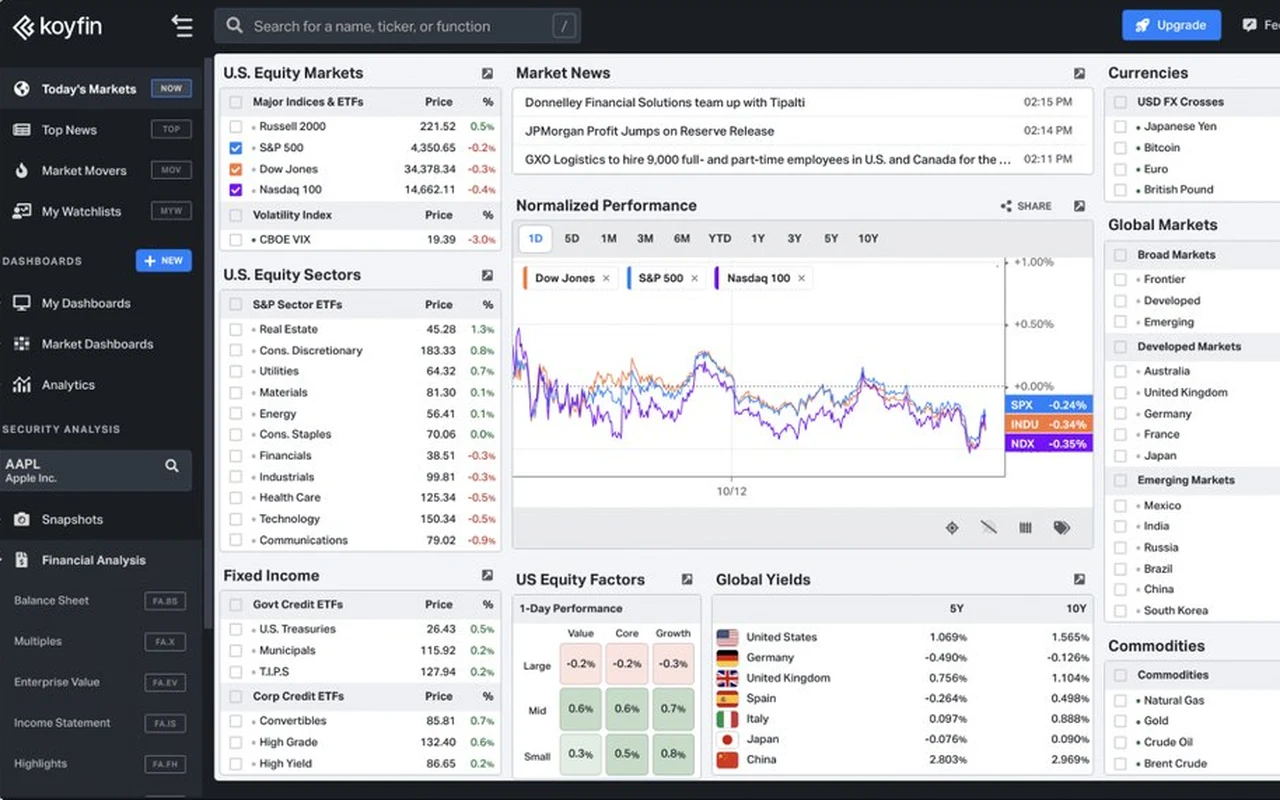
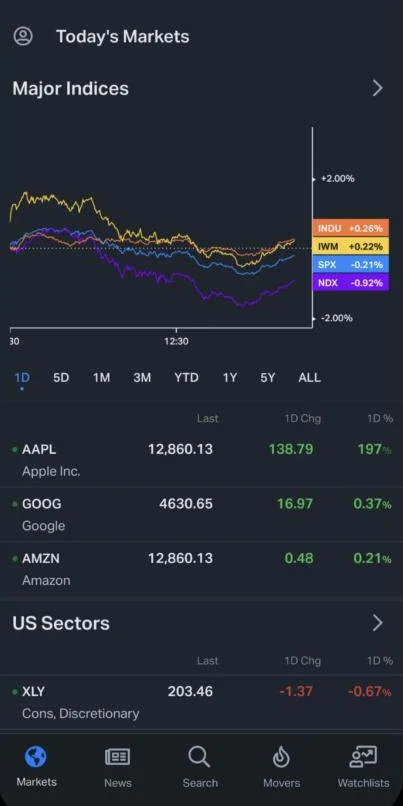
A fintech UX design agency designs the products people use to research, decide and act with money: dashboards, screeners, portfolio and trading flows, onboarding and KYC, native apps and the design system behind them, plus the website that sells the product. DIXI does this for investment research, wealth, trading and fund-tech platforms, with two years of proof inside Koyfin’s product team.
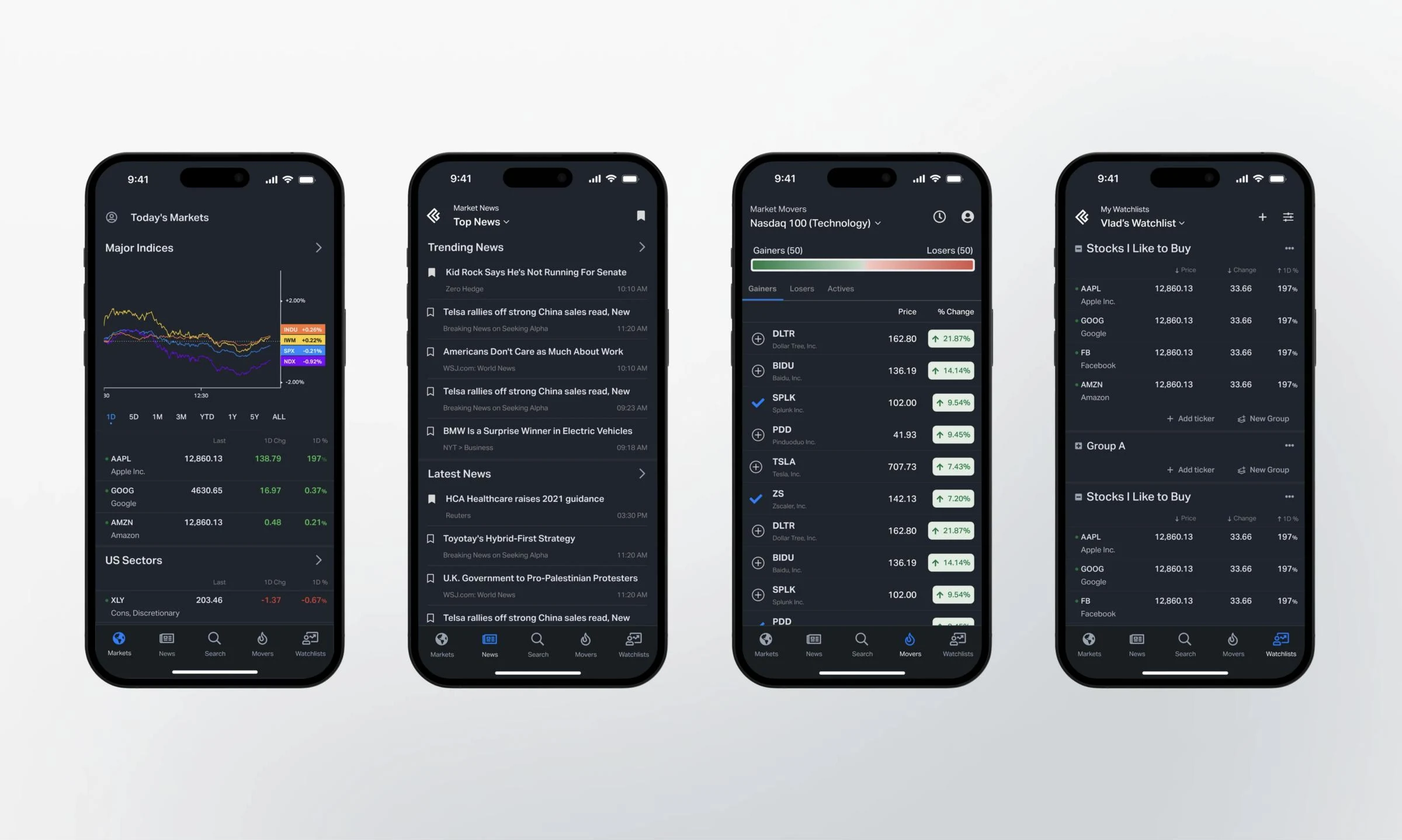
From 2020 to 2022 DIXI worked inside Koyfin’s product team. We designed its native iOS and Android app from the first screen, 8 core web features from Screener to Sharing, and the design systems that keep web and mobile consistent. Over those two years Koyfin grew from 100K to 300K+ users and reached 500K in 2023. That growth is the work of Koyfin’s whole team; we were one part of it.

“DIXI helped us build a mobile app from the ground up and update the product. Their focus on user needs played an important role as we scaled to 500K+ users and expanded our subscription.”
Rich Meatto · Co-Founder, Koyfin
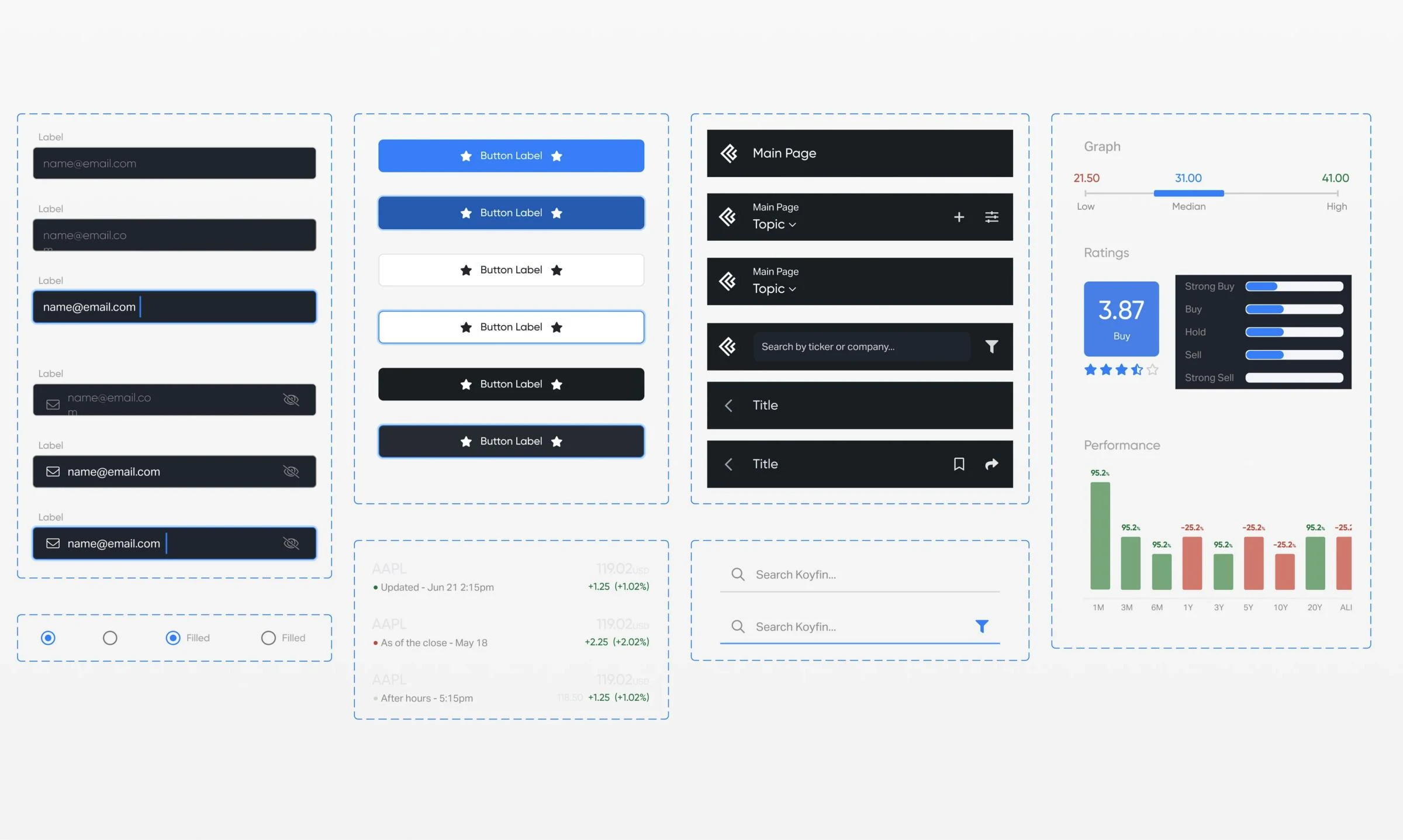
Keep the data, fix the scanning. Investors come for depth, so we rank information instead of removing it: aligned columns and tabular numbers, colour reserved for price moves, one table and filter pattern across every feature, clear live and delayed-data states, a density switch, and saved views, so a workflow opens the way the user left it.
Filters on one side, results that stay sortable and comparable, and a saved state to come back to. That is how we designed Koyfin’s Screener.
Ranges from 1D to ALL, axes, legends and tooltips behave the same in every pane, so a comparison never needs relearning.
Equities, ETFs, funds, indices, bonds, FX, futures and economic data from one search, with filters, on web and mobile.
Long tickers, negative values, missing data and thousands of rows are designed before build, not found in production.
Why it matters: in J.D. Power’s 2025 U.S. Wealth Management Digital Experience Study, advised investors who use their firm’s virtual assistant scored 72 points higher on a 1,000-point scale, and J.D. Power called good design hard to overstate for investor satisfaction. Source: J.D. Power via Business Wire, 20 November 2025.
Products where people make money decisions with dense data: investment research and market data, wealth and portfolio apps, trading front ends, fund tech and investor-relations tools, financial dashboards for B2B teams, native finance apps and the websites that sell them. Our deepest proof is Koyfin; in fund tech, the product and website of an AI outbound platform for fund managers.
| Product type | Typical UX problem | What we design | Where we’ve done it |
|---|---|---|---|
| Investment research and market data | Thousands of securities and dozens of metrics for users who want depth, not less data | Screeners, watchlists, multi-pane charts, saved table views, one search for every asset class | Koyfin, 2020–2022 |
| Native mobile finance apps | Desktop depth squeezed onto a phone | Information architecture around mobile jobs, native navigation, compact sortable tables | Koyfin app for iOS and Android; 4.9★ on the App Store |
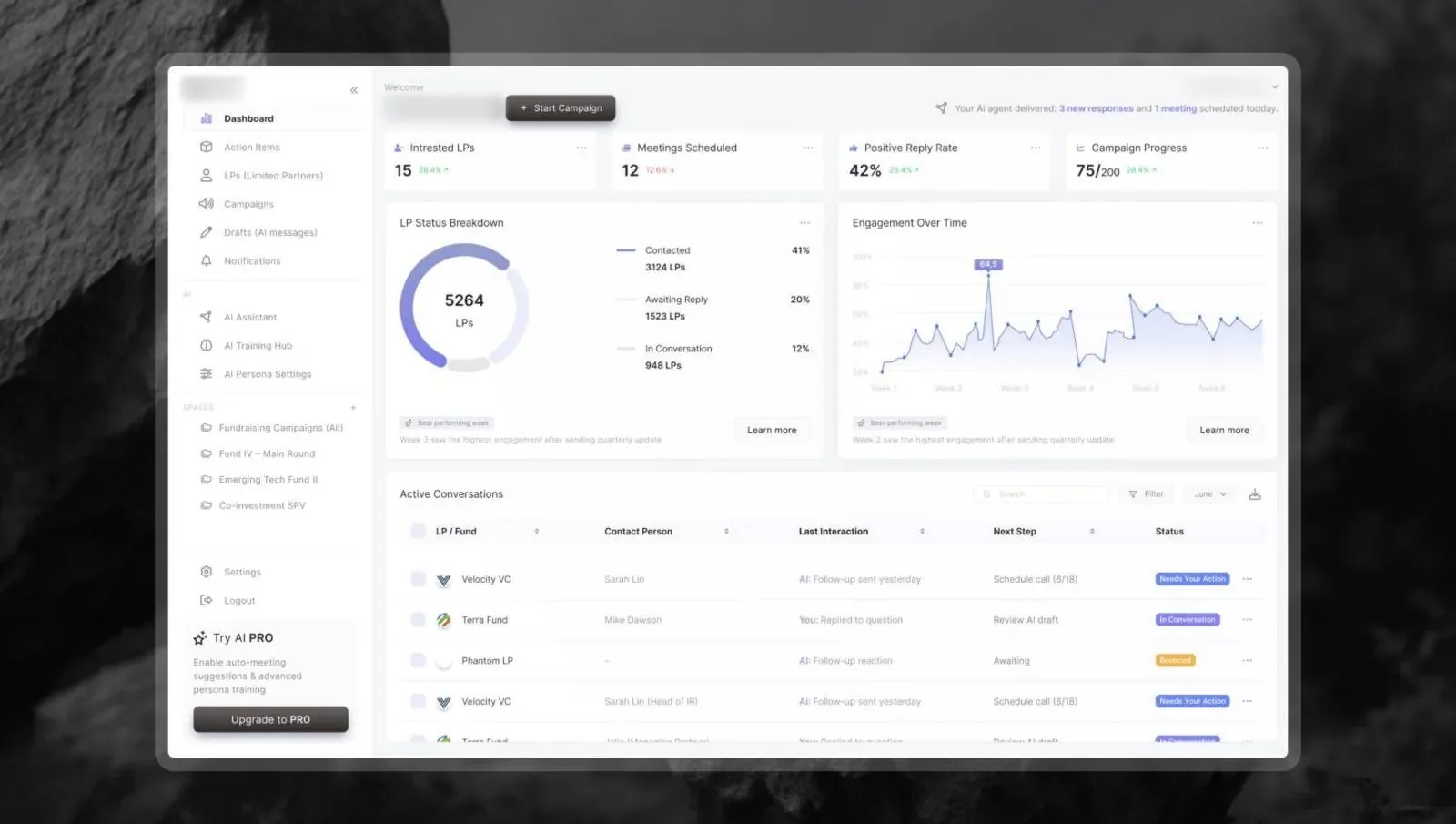
| Fund tech, LP/GP and investor relations | Long fundraising cycles, many contacts, compliance-sensitive messaging | LP pipeline dashboards, campaign views, reporting, and the website that sells it | AI outbound platform for fund managers (name under NDA): product and website, +18% demo bookings |
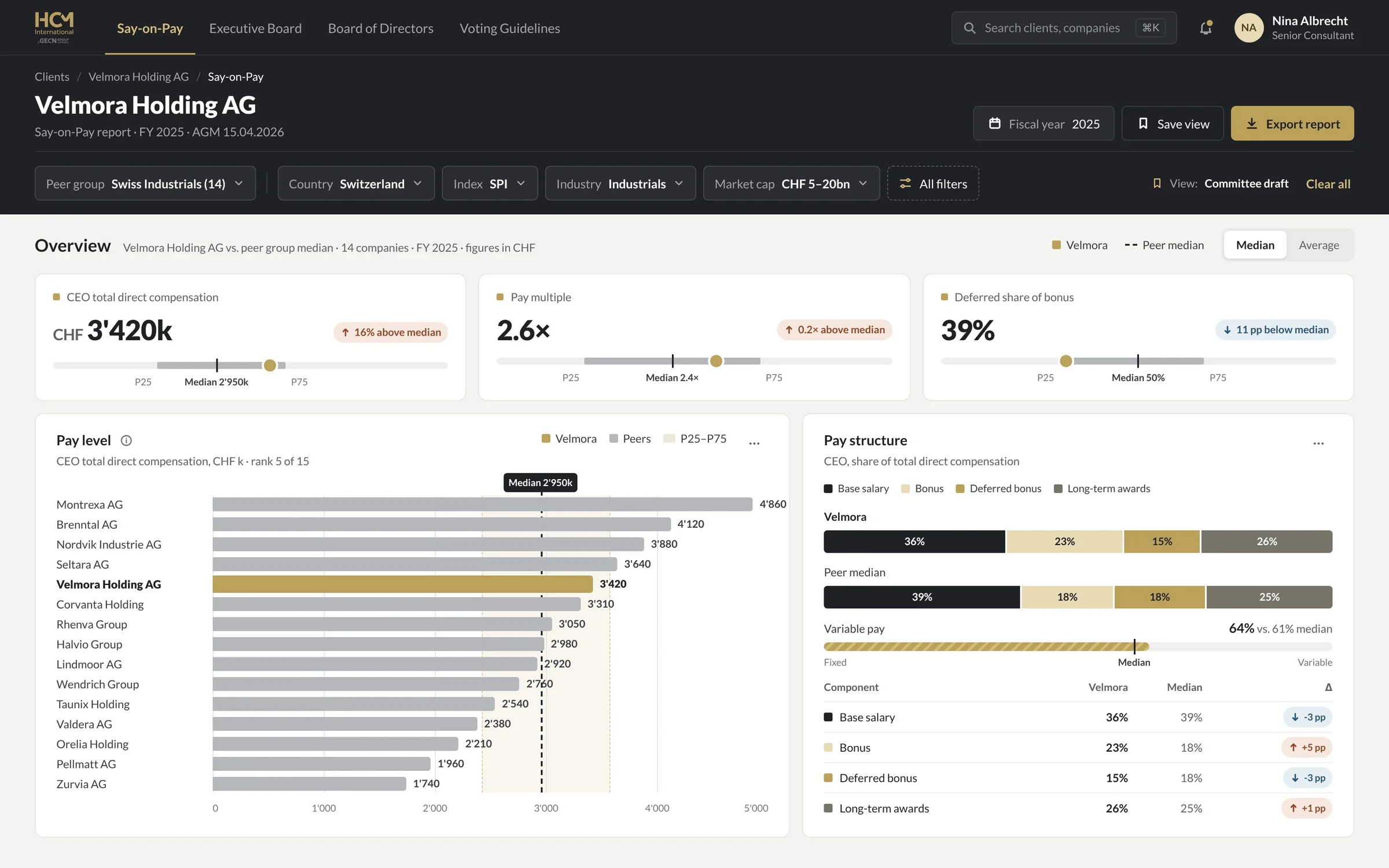
| Financial analytics dashboards for B2B teams | Reports leadership can’t read without an analyst | KPI cards, chart-and-table views, peer comparisons, exports | HCM International: executive pay analytics, +22% users reaching a finished report |
| Wealth and portfolio apps | Holdings, performance and fees that clients misread | Portfolio views with net and gross performance labelled, plain-language explanations, advisor and client roles | Same patterns as Koyfin; not a product we claim |
| Trading and brokerage | Speed, order states and errors with real money | Order tickets with every state, confirmations, live and delayed-data states | Same patterns; not a product we claim |
| B2B fintech websites | A technical product, several buyers and a compliance review | Positioning, the product in motion, proof above the fold, pricing, AI-search structure | B2B SaaS web design; AI outbound platform, +18% |
“Not a product we claim” means we design those flows with the same patterns, but have no shipped case in that exact product type yet.
By asking for less, later, and saying why. We design progressive KYC that collects only what the next step needs, document capture that catches problems before upload, save-and-resume across devices, errors that say what to do next, and a visible status while checks run. Every applicant who drops out is acquisition spend you have already paid for.
Progressive KYC: the first screen asks only what the next step needs, and each request says why.
Live guidance for glare, cropping and expiry dates, so documents pass on the first try.
Applicants stop on the phone and finish on the laptop without starting again.
While checks run: what happens next, how long it takes, and a human to contact if it stalls.
We design so compliance can approve quickly. Required disclosures become components in the design system, every claim links to its source, performance shows net next to gross, and testimonials carry the disclosures the rules ask for. We are not your lawyers: we design to pass your compliance review, and your counsel decides what ships.
| Rule | What it asks for | What we design |
|---|---|---|
| SEC Marketing Rule 206(4)-1 (US investment advisers) | Net performance whenever gross performance is shown; clear disclosure of whether a promoter is a client and whether they are paid | Performance components that pair net with gross; testimonial cards with the disclosure built in |
| FINRA Rule 2210 and Regulatory Notice 26-14 (9 July 2026) | Proposes letting broker-dealers set risk-based procedures for which retail communications need principal pre-approval; Gen AI tools may be part of supervision if “vetted, tested and monitored”. Comments closed 11 September 2026 | A content system of labelled, reusable templates, so routine pages follow approved patterns and reviews focus on what is new |
| MiCA Article 7 (EU crypto-asset marketing) | Marketing clearly identifiable as marketing, fair and not misleading, consistent with the white paper, with a notice that no authority approved it | Marketing-notice, white-paper link and risk-statement components that can’t be left off a page |
| European Accessibility Act (enforceable since 28 June 2025) | Accessible consumer banking and e-commerce websites and apps for EU consumers, wherever the firm is based | WCAG 2.2 AA as the design target: contrast, focus states, keyboard paths, screen-reader labels |
Not legal advice. Sources: SEC compliance guide, FINRA Regulatory Notice 26-14, ESMA, MiCA Article 7, Travers Smith on the EAA. Checked 31 October 2026.
Our deepest fintech proof is two years inside Koyfin’s product team. Alongside it: the product and website of an AI outbound platform for fund managers, and HCM International’s executive pay analytics.
users while we were in the team, from 100K in 2020 to 300K+ in early 2022. We designed 8 core web features and the design system.
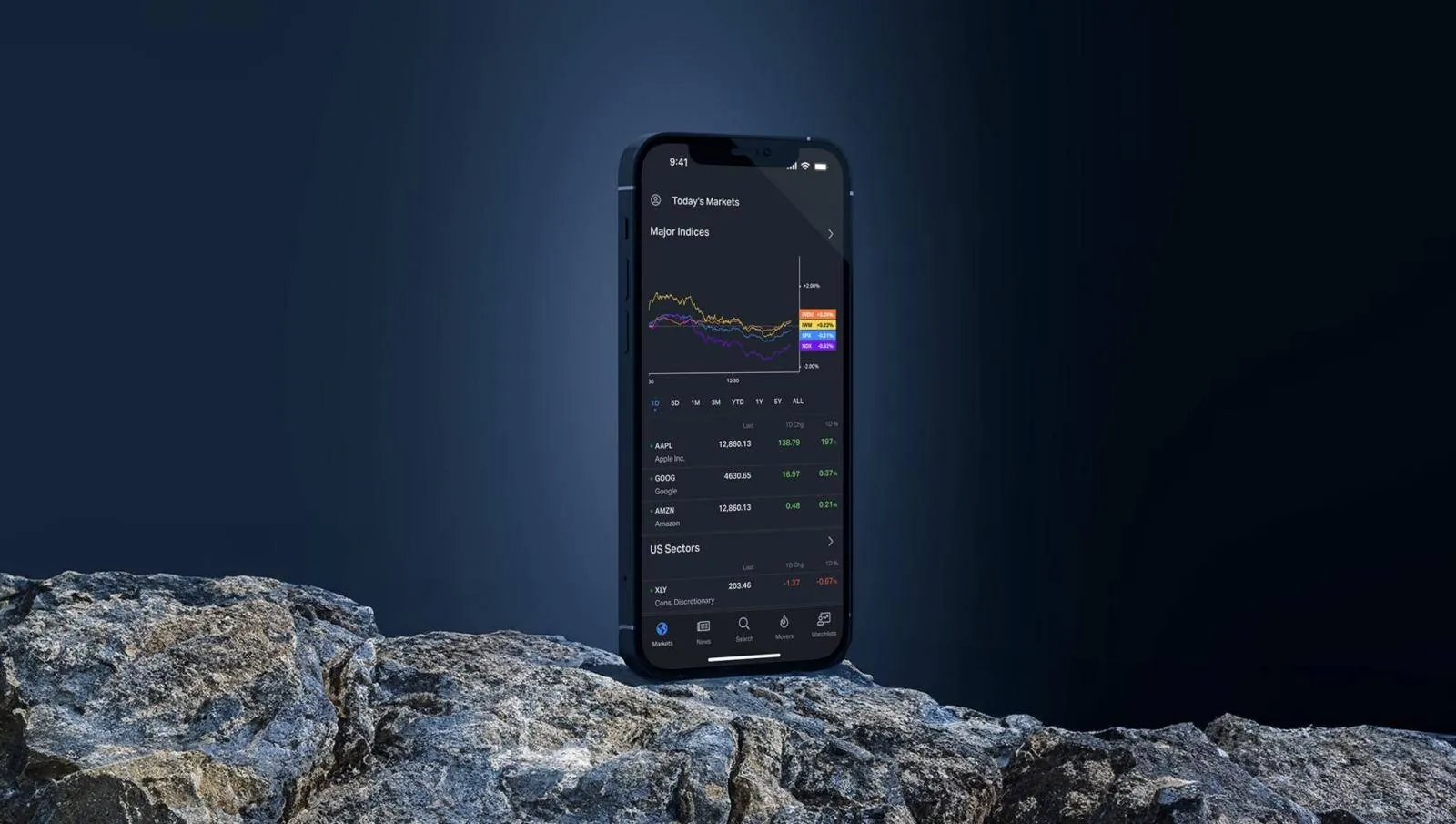
App Store rating from 1.4K ratings (October 2026). We designed the app from the first screen: markets, news, search, movers and watchlists.
demo bookings after the new website. We also designed the product: a dashboard for LP fundraising campaigns run by an AI agent.
more users reach a finished report after we rebuilt the reporting platform: 8 steps across 4 tools became 4 steps in one platform.
Client milestones are the work of each client’s whole team; design was one part. Some clients stay anonymous under NDA.
Start with a Sprint on the page or flow that matters most, run a scoped project for a new product or redesign, or embed DIXI as your design partner, the way we worked inside Koyfin. We sign your NDA before the first working session, and calls fit US and European hours.
Audit and redesign of your homepage or key page: message, structure, proof.
Full website or product redesign, with a design system your team can grow.
Ongoing product and web design, experiments and monthly reviews.
A bigger scope, several services at once or a different timeline. We will shape the format and the price around your project.
We fit fintech teams from Seed to Series B with a live or nearly live product, data-heavy screens and a budget from $8k for a Sprint or $12k for a project. We are not the right choice for infrastructure with no user-facing product, quick white-label templates or teams that want their designer to sign off compliance.
With DIXI, a Conversion Sprint starts at $8k (3–4 weeks), a product or website project at $12k (6–10 weeks) and a design partnership at $6k a month. Published fintech specialists start higher: Fuselab from $25k, Huemor mostly $60k–$150k for fintech websites, and premium studios list $50k–$100k+ minimums. Scope, not the word “fintech”, sets the price.
| Option | Published price | Timeline | What it covers | Source |
|---|---|---|---|---|
| DIXI | Sprint from $8k; projects from $12k; partner from $6k a month | Sprint 3–4 weeks; projects 6–10 weeks; partner from 3 months | Research, UX/UI, design system, native app design, website design and build | DIXI pricing |
| Fuselab Creative (fintech UX) | From $25,000; $100–149 an hour | MVP 8–12 weeks; full project 10–20 weeks | Research, regulated flows, design system | Fuselab |
| Huemor (fintech websites) | Most projects $60k–$150k | 16–20 weeks for a redesign | Marketing website | Huemor |
| UXDA (financial UX) | $50k–$199k a project | Not listed | Banking and fintech UX | 925Studios list |
| Lazarev.agency | $100–149 an hour; $50k minimum | Not listed | Product and AI UX | 925Studios list |
| Clay | $150–199 an hour; projects $100k+ | Not listed | Brand, web and product | 925Studios list |
| Eleken (subscription) | From $3,800 a month | Ongoing | UI/UX design by subscription | 925Studios list |
Third-party prices as published on each source, or as listed by 925Studios on 27 March 2026; checked 31 October 2026. All DIXI formats and what changes a quote: see pricing.
Pick by where the hard part is. A senior in-house designer suits a steady roadmap but takes months to hire. A freelancer suits one contained task. A generalist agency brings polish but learns finance on your budget. A fintech-experienced studio fits when the hard part is the product itself: dense data, regulated flows and expert users who already know Bloomberg.
| Option | Senior access | Finance domain depth | Time to start | Who builds | Best for |
|---|---|---|---|---|---|
| DIXI | The founder on every project | Two years inside Koyfin; fund-tech product and website | After a 25-minute call and a written plan | DIXI or your engineers | Seed to Series B investment, wealth and fund-tech products |
| Fintech specialist agency | Often a senior lead with a larger delivery team | Strong, often banking-heavy | Weeks | Sometimes the agency | Banks and later-stage fintechs with bigger budgets |
| Generalist agency | Varies by team | Learned during the project | Weeks | Sometimes the agency | Brand and marketing sites |
| In-house senior designer | Full-time, one person | Grows over time | Months to hire | Your engineers | A steady roadmap on one product |
| Freelancer | One person | Varies | Days to weeks | Your engineers | One contained, well-defined task |
Our view of each hiring model, not survey data. Comparing costs instead? See the table above or our pricing.
Websites in Webflow, Framer, Astro and Shopify. Products in React, Next.js and React Native.
 Webflow
 Framer
 Astro
 Shopify
 React
 Next.js
 React Native
 Swift
 Figma
 Cloudflare

I'm Ignat, and you work with me directly: no account managers and no handoffs, just a senior team that designs and builds your site.
With DIXI, a Conversion Sprint starts at $8k, a product or website project at $12k and a design partnership at $6k a month. US fintech specialists publish higher entry points: Fuselab starts fintech UX projects at $25k, and Huemor says most of its fintech websites cost $60k–$150k. Our pricing page shows what is included and what changes a quote.
A Sprint takes 3–4 weeks and a scoped project 6–10 weeks. A native app or a multi-module redesign usually runs as a design partnership of three months or more; ours with Koyfin ran two years. For comparison, Fuselab publishes 8–12 weeks for a focused fintech MVP and 10–20 weeks for a full project.
Investment research most deeply. From 2020 to 2022 we worked inside Koyfin’s product team: its native iOS and Android app from zero, 8 core web features from Screener to Sharing, and the design system. In fund tech we designed the product and website of an AI outbound platform for fund managers. Trading and wealth flows reuse the same patterns, and we say plainly which products we have and haven’t shipped.
We design for it: required disclosures as design-system components, net performance next to gross, testimonial disclosures, progressive KYC flows and copy your compliance team can trace to a source. We follow changes such as FINRA’s Regulatory Notice 26-14. We are not lawyers, so your compliance team and counsel approve what ships.
Yes. We designed Koyfin’s native app for iOS and Android from the first screen; the iOS app is rated 4.9 from 1.4K ratings (October 2026). We design for both platforms on shared tokens with native navigation and tables. For release, Apple’s App Review Guidelines ask that apps in highly regulated fields such as financial services be submitted by the legal entity that provides the service, so we plan the release with you early.
Keep the data and fix the scanning: aligned columns, tabular numbers, colour only for price moves, a density switch and saved views. Every widget says how fresh its data is, from live to delayed to stale, and every chart shares one grammar for ranges, axes and tooltips, so a new feature looks like the rest of the product.
Yes. Koyfin’s engineers built what we designed; we worked in their time zone, reviewed designs with them before each build and checked shipped features after release. Your engineers get Figma components, tokens, specs and every state. If you need a build partner too, DIXI develops websites and product front ends.
Usually with a Conversion Sprint: a 3–4 week audit and redesign of your highest-traffic page, from $8k, with build and launch as an optional add-on quoted after the audit. After its new website, an AI outbound platform for fund managers saw 18% more demo bookings.
Yes. We sign your NDA before the first working session, work inside your tools and accounts, and use sample data in anything shown outside your team. Some of our fintech work is published without the client’s name, like the AI outbound platform for fund managers on this page.
Yes. Calls are scheduled to overlap US and European working hours. We design to WCAG 2.2 AA, a practical target for the accessibility the European Accessibility Act has required of consumer banking and e-commerce websites and apps in the EU since 28 June 2025.
Book a 25-minute call with Ignat, or get a free teardown of your fintech homepage or onboarding flow.
We use essential storage to run this site. With your OK we also use analytics to see which pages help visitors. No ad tracking. Cookie policy
Choose what we can use. You can change this any time from Cookie settings in the footer.
 Ignat · Founder